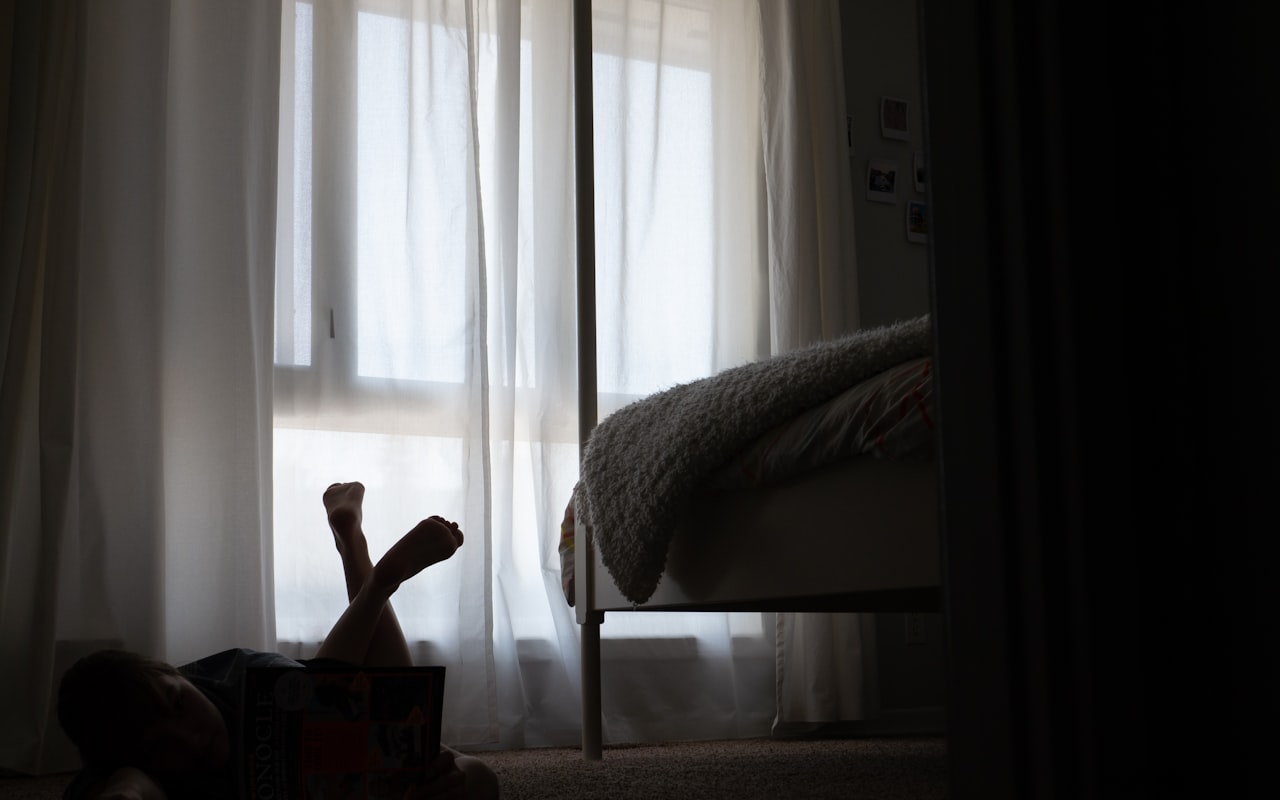
Four in the morning is a strange hour to negotiate with a preschooler. The house is dark, the coffee is not made, and someone small is standing next to your bed asking whether it is time for pancakes. If this has happened three days in a row, you already know it is not a fluke, and if it has happened for three months, you are probably running on the kind of tired that makes you cry at car commercials. This guide is for that stretch, before you give up and just start living on a farmer’s schedule.
Figure out whether 4 a.m. is actually a wake or a fragment
The first thing worth sorting is whether your child is fully awake at 4 or is stirring in a way that a two-minute intervention could settle. Kids cycle through lighter sleep every 60 to 90 minutes, and early morning cycles are the shallowest of the night. A partial wake looks like whimpering, kicking blankets off, mumbling, or sitting up with eyes half-closed. A real wake looks like eye contact, requests, and feet on the floor.
For a week, jot down what you see at the door: time, position, whether they were talking or crying, and what fixed it. You do not need an app. A sticky note on the fridge is enough. Patterns show up fast. If four out of seven mornings are actually 4:10 to 4:25 stirrings that resolve when you hand back a lovey, you have a completely different problem than a child who is genuinely up for the day.
The five common causes, ranked by how often they turn out to be the answer
In talking with other parents and reading through the parent-facing material at the American Academy of Pediatrics, the same handful of causes keep coming up. Here is the rough order I see them show up in families I know:
- Too-early bedtime for the current nap situation. A 2-year-old who dropped the second nap but is still going down at 6:45 p.m. will often bank sleep and hit their limit around 4:30 a.m.
- Light and sound leaks. A streetlight through a thin curtain, a garbage truck at 4:15, a birdsong window, a hallway nightlight aimed at the crib.
- Room temperature drift. Rooms often bottom out at their coldest between 4 and 6 a.m., and a chilly kid wakes up.
- Hunger or a full bladder. Common in the 3 to 5 age range and in kids who eat dinner at 5:30 and are done eating by 6.
- Sleep association that requires you. If bedtime involves being rocked or lying with them, they may need the same setup to fall back at 4.
You will notice medical causes are not in the top five. They matter, and I will get to them, but the odds favor the boring environmental stuff first.
The 15-minute audit that fixes about half of these
Before changing anything about your child, change the room. Go stand in their bedroom at 4 a.m. tomorrow. It is grim but it is diagnostic. Notice what you can hear, what light is coming in around the curtain edges, whether the register is blowing cold air, whether a device is glowing. Take your phone and check the temperature with a cheap thermometer app or a $12 room thermometer. Most kids sleep best between 65 and 70 degrees Fahrenheit.
Then do these four things in daylight:
- Add blackout panels or tape black construction paper to the top 6 inches of the window where light leaks in.
- Move a white noise machine to the wall closest to the loudest outside sound and set it around 50 decibels.
- Push bedtime later by 20 to 30 minutes for four nights and see what happens.
- Offer a real bedtime snack around 30 minutes before lights-out: something with protein and complex carbs, like nut butter on whole-grain toast or plain yogurt with granola.
Do these together, not one at a time. You are trying to end the misery, not run a clean experiment.
What to do in the actual moment at 4 a.m.
The rule I keep coming back to is: whatever you do at 4 becomes the new 4 a.m. routine within about a week. If you turn on the kitchen light and make oatmeal, your child’s body will start waking hungry at 4. If you bring them into your bed and let them watch a tablet, they will start asking for the tablet before their eyes are open.
What tends to work is a boring, dim, brief response. Keep the room dark. Speak quietly. Offer water, a bathroom trip if they are potty trained, and a return to bed. If they are old enough for an okay-to-wake clock (usually 2.5 and up), point at it and say the color has not changed yet. Then leave. Not every kid falls back asleep, but many will lie there quietly, and quiet in bed at 4:30 is a different animal than crying in the kitchen.
The concrete scenario: a 3-year-old, a fish tank, and a 5:15 breakthrough
A friend of mine had a 3-year-old who woke at 4:05 or 4:10 every morning for about six weeks. They had tried later bedtime, earlier bedtime, cutting the nap, adding a snack. Nothing moved. The turning point was standing in the room in the dark and realizing the fish tank filter had a small blue LED that they had stopped seeing during the day, and it was reflecting off the closet mirror straight onto the crib. They covered the LED with a piece of black electrical tape. Two nights later, wake time drifted to 5:15, and within ten days it settled at 6:00.
The point is not that everyone has a fish tank. It is that the fix is often small, specific, and physical, and you find it by looking at the room at the exact hour the problem is happening.
When the fixes are not working
If you have run the audit for two full weeks, kept the routine consistent, and your child is still up at 4 with energy for the day, it is worth calling the pediatrician. The Sleep Foundation notes that persistent early waking can sometimes point to snoring or breathing-related sleep issues, iron levels that affect restless sleep, or, less commonly, anxiety that shows up as early waking rather than trouble falling asleep.
Bring the notes you took. Even a shaky week of a sticky-note log makes the appointment ten times more useful than a general “she wakes up too early.” Ask specifically about snoring, mouth breathing, sweating, and whether their growth or diet suggests looking at iron. None of this means something is wrong. It means the pediatrician has more to work with than a tired parent’s memory.
What to change during the day, not just at night
Early waking is often held in place by the daytime schedule around it. If your kid is going to bed at 7:00 and getting 11 hours plus a nap, 4 a.m. plus a nap is 14 hours of sleep, which is more than most kids past age 3 need. The fix might be shrinking or dropping the nap, not the night.
Some daytime moves that quietly help:
- Get 20 to 30 minutes of outdoor light in the first two hours after your child wakes, even if that wake is at 4:30.
- Cap the nap at the age-appropriate length: about 90 minutes for 2-year-olds, 60 to 75 for 3-year-olds, 45 or a quiet-time swap for 4-year-olds.
- Keep dinner protein-forward and served at least 90 minutes before bath.
- Watch the sugar or juice window after 4 p.m., not because sugar wrecks sleep for everyone, but because it makes the settling harder for some kids.
If your household is also juggling siblings on different schedules, our notes on sibling and family communication and on meal planning and household systems can help you avoid the classic trap of an early riser dragging the whole family into a 4 a.m. day. Related reading on the sleep and daily schedules hub covers nap transitions and bedtime routines that pair well with the audit above.
How long to give any of this
Sleep changes take a boring amount of time to stick. Give any single change five to seven nights before you decide it did not work. If you keep swapping approaches every two days, you will teach your child that 4 a.m. is negotiable and interesting, which is the opposite of what you want.
A reasonable timeline looks like: week one, room audit and bedtime shift; week two, hold the line and track; week three, evaluate and either call the pediatrician or ride out the pattern for another two weeks. It is slow. It is also finite, which matters when you are staring at the ceiling at 4:12.
The mindset that keeps you sane in the middle of it
Early waking is one of the parenting problems that feels like a character flaw and is almost never one. Your child is not manipulating you at 4 a.m. Their small body is responding to light, temperature, hunger, cycles, and habit, and yours is trying to keep up on five hours of sleep. Be patient with the process and, honestly, with yourself. Trade mornings with a partner if you can. Go to bed earlier than feels reasonable. This ends.
If you want more of how we think about writing this kind of thing, our editorial standards page lays it out, and you can always get in touch if there is a corner of the schedule question we have not covered yet.