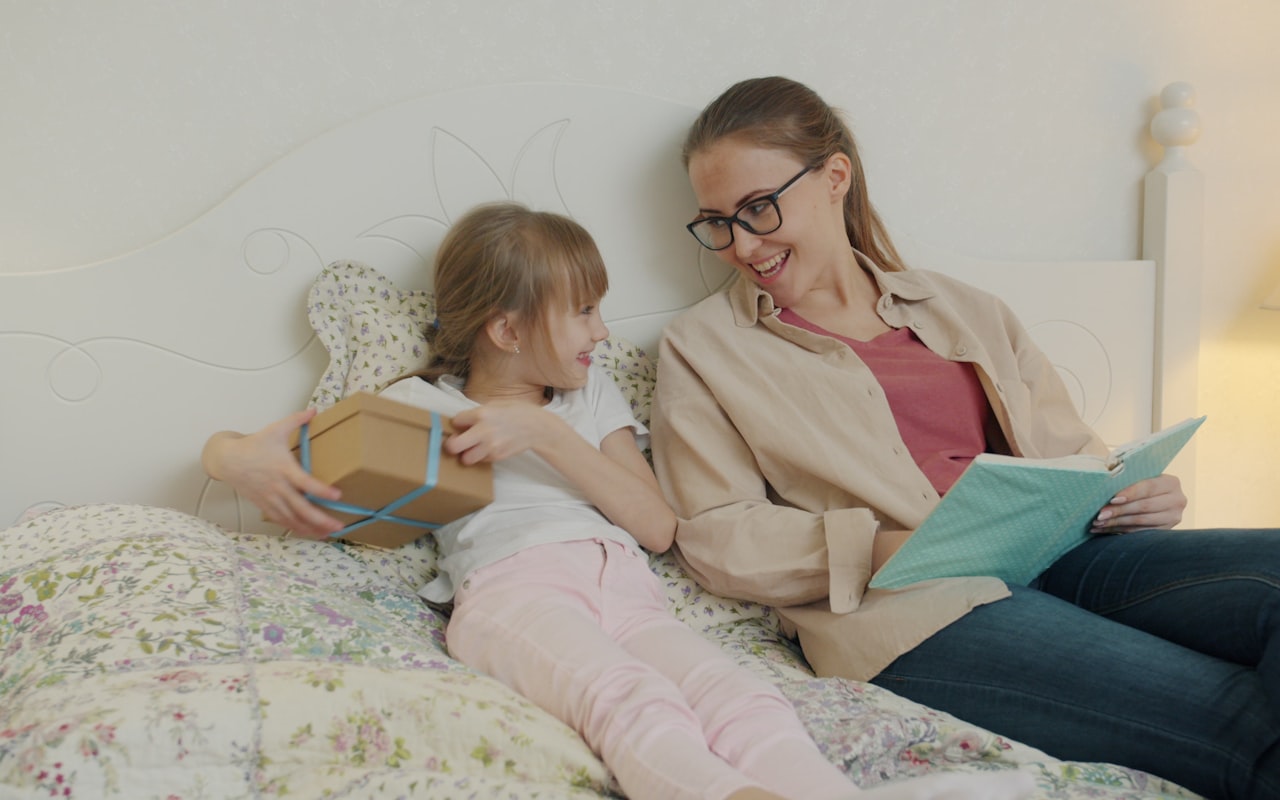
Bedtime in our house used to end at 8:15 and start unraveling around 8:45. The lights were off, the story was read, the water cup was full, and somehow the whole thing still leaked into the hallway for another forty minutes. What finally shifted it was not a new routine. It was a fifteen minute window that already existed, used differently.
Sleep researchers keep pointing at the same short stretch of time before a child actually closes their eyes. The Sleep Foundation summary on children and sleep puts it plainly: what happens in the last quarter hour tends to set the tone for the first three hours of the night, which is where most of the deep restorative sleep sits. Get that window right and the rest of the night is quieter for everyone.
What the last fifteen minutes are actually doing
The brain does not have a light switch. It has a dimmer that responds to input, and the input it responds to most strongly is not the story you read or the song you sing. It is the level of stimulation in the room, the light coming into the eyes, and the emotional temperature of the adult in charge. Kids read us far more than we think, and they especially read us at bedtime.
So the fifteen minutes I mean here are not the bath, not the pajamas, not even the story. They are the sliver of time between the story ending and the child being alone in a dark room. In our house that used to be a hallway conversation, a forgotten stuffed animal, a request for a snack, and a check on the sibling. On a good night now, it is almost boring, and boring is what we want.
The five inputs that actually matter
I stopped trying to design a routine and started auditing five specific inputs during that last stretch. When one of them is wrong, the night gets long. When all five are calm, most kids drift off inside ten to twelve minutes.
- Light. The room should be darker than the hallway by a wide margin. A crack of white light under the door will keep a four year old parsing sounds for thirty minutes.
- Temperature. Cool works. Somewhere between 65 and 68 degrees Fahrenheit is the range most pediatric sleep guides land on. Overheated kids wake at 2 a.m. hungry and confused.
- Sound. Either consistent (a fan, white noise around 50 decibels) or absent. Intermittent sound from the rest of the house is the enemy.
- Bladder. The last pee should happen after teeth, not before. This one small reorder ended about a third of our callouts.
- Emotional state. Whatever the child is holding, they will hand it to you at lights out. If you are rushed, they will stall.
None of this is novel. What was new for me was treating them as a checklist instead of a mood.
The two minute goodbye
The single change that moved the needle most was cutting our goodbye down and making it identical every night. Kids, especially between ages three and seven, do not want a long tender farewell. They want a predictable one. Long goodbyes read as uncertainty, and uncertainty makes them want another one.
Ours is now four beats. A back rub for about thirty seconds. One sentence about tomorrow (“we have swim in the morning”). “I love you, sleep well.” Door to the exact same position, every night. Total time under two minutes. The first week my daughter tested it four or five times a night. By the second week, she stopped asking.
The healthychildren.org guidance from the AAP on sleep habits notes that consistency of the bedtime cues matters more than the specific content of them. That has been true in every house I have compared notes with.
A concrete scene from a Tuesday
Our son is six. On a Tuesday in March, he had a hard day at school, a friend had ignored him at recess, and he came home quieter than usual. We did the normal evening. Bath at 7:10. Pajamas by 7:25. Story at 7:35. On paper it was a textbook night.
What I almost missed was the fifteen minutes after the story. He wanted to talk about the friend. If I had said “we can talk about it tomorrow” and closed the door, he would have been awake at 9:30 spinning on it. Instead I sat on the floor for about eleven minutes and let him tell it. Nothing profound was said. He got to the end of the story, I said “that sounds really hard,” and he was asleep by 8:05.
The lesson was not “always talk about feelings at bedtime.” The lesson was that the fifteen minutes are a container. Whatever the child brings, that is what fills it. Rushing the container turns a ten minute conversation into a two hour wakeup.
When it goes wrong anyway
Sometimes you do everything right and the child still bounces off the mattress like a pinball. A few patterns show up over and over:
- Screen time inside the previous 90 minutes. Even a calm show. The blue light and the cognitive load push melatonin back. Move screens to before dinner and this often resolves inside a week.
- Sugar or a big carb load after 6 p.m. This is more individual than most sleep advice admits, but if you see 45 minutes of stalling after dessert nights, that is your answer.
- A too-late nap for the under-fives. A 3:30 to 4:15 nap will push bedtime to 9:15 no matter what routine you run.
- An unresolved worry from earlier in the day. This is the one that looks like defiance and is not.
Early morning waking is its own animal, and it usually has a different root cause than late bedtime resistance. If your child is up before 5 a.m. more than twice a week, the sleep pressure math is off somewhere earlier in the day, and the fifteen minute window will not fix it on its own. I wrote a longer piece on that pattern in what to do when a child wakes up at 4 a.m. every day that walks through the wake window audit.
How this fits with the rest of the evening
The fifteen minutes only work if the ninety minutes before them are not chaos. That is the honest caveat. A rushed dinner, a shouted homework session, and a frantic tidy at 7:30 will contaminate any calm you try to manufacture at 7:55. Most families I talk to who have late-stall bedtimes actually have a late-dinner or a homework-timing problem in disguise.
Two adjacent pieces worth reading if this is you: the pace question is really an after-school routine question, and the tidy question is really a household systems question. Bedtime is downstream of both.
What to try tomorrow night
Pick one input from the list of five and only that one. If your room is warm, drop it to 67 degrees. If the hallway light bleeds in, tape a folded towel across the bottom of the door. If your goodbye is longer than two minutes, cut it in half and keep it identical.
Give it four nights. Sleep changes rarely show up in one. On night three or four you will usually see the timing shift by ten to twenty minutes on the front end, and, more importantly, a quieter first waking. That is the win. Not a perfect night. A quieter one.
Bedtime is not a personality trait of your child or a moral test of your parenting. It is a set of small inputs in a fifteen minute window, and most of them are inside your control on any given Tuesday.