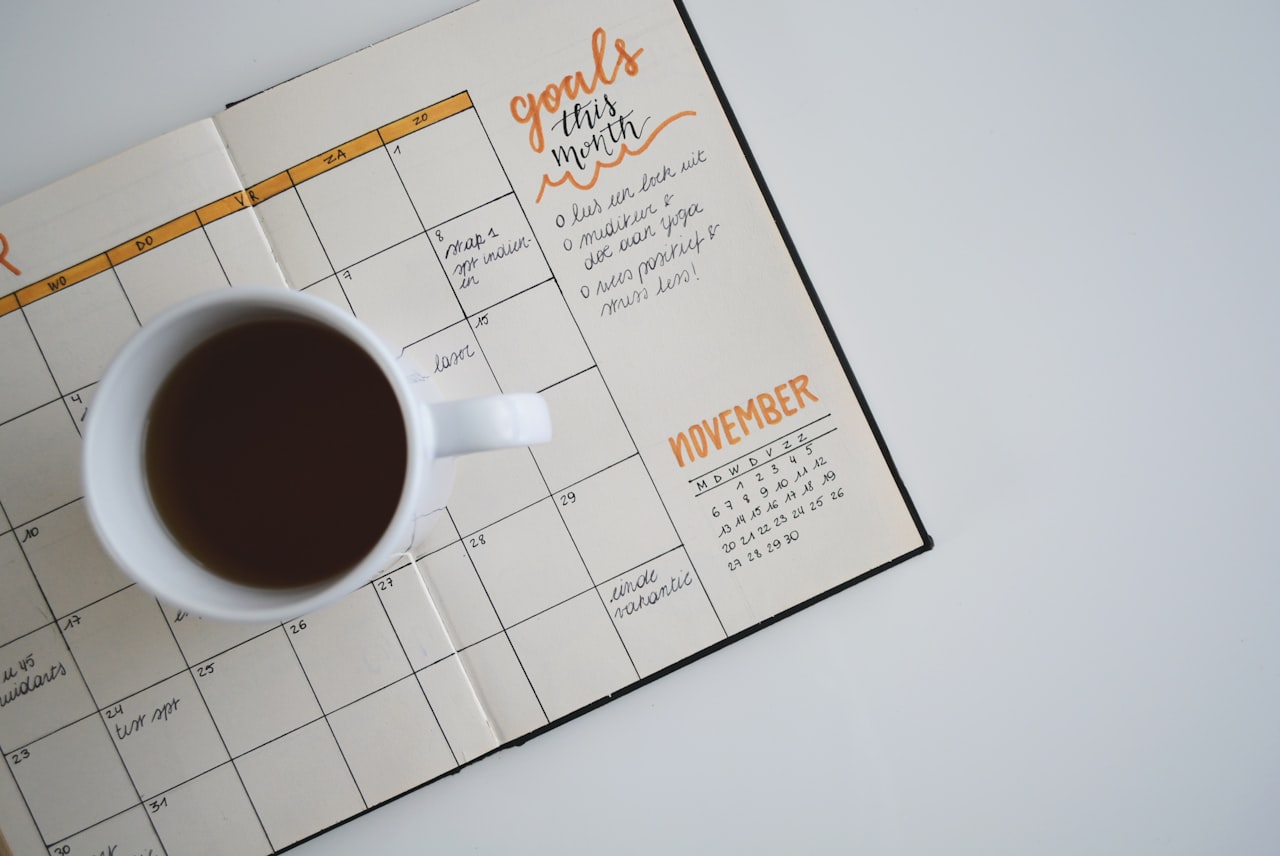
Somewhere around second grade, the folder in the backpack stops being enough. A worksheet gets lost. A permission slip surfaces on the morning it is due, softened by a banana. A reading log arrives home three days after it was assigned, with the parent reading it aloud at bedtime while trying not to sound annoyed. The child is not disorganized. The system is just too small for the week.
A planner, at this age, is not really about productivity. It is a small container for the parts of school that would otherwise live in a child’s head, or worse, in yours. What follows is what we have seen work in ordinary homes, with ordinary children, at the ordinary hour of 4:15 in the afternoon when everyone is a little tired.
What a planner is actually for at this age
Grown-ups tend to think of planners as tools for time management. For a 7 or 9 year old, that is not quite the right frame. A child this age is not scheduling meetings. They are learning, slowly, that the invisible things (a spelling test on Friday, gym clothes on Wednesday, a library book due tomorrow) do not disappear when they stop thinking about them.
The planner’s real job is to make those invisible things visible for about ninety seconds a day. That is it. If it does more than that, it will not last past October. If it does less, it will not be worth the paper.
We wrote about a similar principle in homework and school routines: the goal is not to raise a project manager. It is to lower the number of things a tired child has to remember before dinner.
Choosing between three formats
Most families end up in one of three camps. Each works. The wrong one for your child will quietly sabotage the whole thing.
| Format | Best for | Tends to fail when |
|---|---|---|
| Paper weekly planner | Kids who like to draw or check boxes; teachers who sign it | The child forgets it at school; handwriting takes longer than the task |
| Whiteboard on the fridge | Whole-family visibility; kids who lose paper | Nobody erases it; it becomes wallpaper by week three |
| Shared app on a parent’s phone | Older elementary (grades 4-5); frequent schedule changes | The child never actually opens it; screen time creeps in |
A useful shortcut: whichever format the child glances at without being asked, twice, in the first week, is the right one. If you have to remind them every day, the tool is fighting the child instead of helping them.
The 90 second after school ritual
The whole system rises or falls on one small habit. Somewhere between arriving home and starting a snack, the backpack gets emptied and the planner gets looked at. Not filled out in detail. Not turned into a scene. Just opened.
Here is the sequence we have seen hold up in about a dozen households:
- Backpack lands in the same spot every day. A hook by the door. The kitchen bench. Not the floor of a bedroom.
- Child (not parent) pulls out any papers and puts them in one pile.
- Together, you glance at the planner or the folder. You name what is due tomorrow out loud. That is the whole magic sentence: “What do you have for tomorrow?”
- Anything with a deadline gets a tiny mark, a dot or a highlight, next to it.
- The backpack goes back on its hook, half packed for the morning.
Ninety seconds. Maybe two minutes if there is a lot. If it takes longer than five, something is wrong, either the system or the day, and it is fine to stop and try again tomorrow.
What the planner should not become
A common failure mode is worth naming. The planner becomes a second homework assignment. The child writes down every task in careful cursive, the parent adds three color coded reminders, and by Thursday nobody wants to open it because it looks like work.
If your child’s planner has more than about eight items on any given day, it has drifted. Elementary school does not actually generate that many discrete tasks. What has usually happened is that adult tasks (piano at 5, dentist at 3:30, remember to bring a snack) have crept onto a page that was meant to hold a child’s world.
Keep a separate family calendar for adult-owned logistics. We have written more on that in meal planning and household systems. The child’s planner should only carry what a child is expected to remember.
A Tuesday that went a little sideways
A parent I know keeps a small green notebook by the toaster. Her daughter is 8. One Tuesday in October, the child came home with a reading log, a note about picture day on Friday, and a math worksheet that was, in her words, “kind of tricky.” It was 3:52 in the afternoon.
They did the ninety second thing at the counter. The mother did not read the worksheet. She did not ask about the note. She just said, “What is one thing you want to do first?” The child chose the reading log because it was the shortest. She read for eleven minutes, marked the log, and then, without being asked, said, “I think the math is the hard one.” They did it together, badly, for fifteen minutes, and left it.
The picture day note went on the fridge with a magnet. That was the whole afternoon. Nothing was heroic. Nothing was Instagrammable. But at 8pm nobody was crying about a lost worksheet, and that is the actual metric.
When it stops working
Every planner system dies at least once. Usually around week four or five, sometimes right after a school holiday. The child stops opening it. You stop asking. A week passes. Something gets missed.
This is normal. It does not mean the child is failing at responsibility. It means the novelty wore off, which is what novelty does. Two ways back in:
- Shrink the ritual. Instead of the full ninety seconds, just ask the one question: “Anything due tomorrow?” Do that for three days. Then rebuild.
- Change one small physical thing. A different colored pen. A new spot for the backpack. A sticker on the front of the planner. Novelty is cheap and it does real work.
What you do not need to do is have a serious conversation about it. Serious conversations at 4pm about organizational skills do not improve organizational skills. They just make the planner feel heavier.
How teachers fit in, or do not
Some elementary teachers send home a school-issued agenda and expect it to be signed nightly. Some teachers do not mention planners at all. Both are fine. If your child’s school has a system, use theirs first, even if it is uglier than the one you would have chosen. Fighting a school-issued agenda in September is not worth the six week payoff of your preferred notebook.
If the school has no system, you get to invent one. The American Academy of Pediatrics’ HealthyChildren guidance on school-age routines is a reasonable starting point for how much structure is developmentally appropriate at ages 6 through 10. The short version: less than you think.
Talk to the teacher at conferences, not by email at 9pm. Ask one question: “How does she seem to keep track of what is due?” The answer will tell you whether your home system is helping or getting in the way.
A few small things that hold it together
Some pieces are almost too small to mention, but they are the reason the whole thing works on a Wednesday in February when nobody feels like it.
- Same time, same place. The ninety seconds happens in the kitchen, after shoes come off, before a snack. Not in the bedroom. Not after dinner.
- One pen. Not a pencil case. A single pen that lives with the planner. If it goes missing, replace it that day.
- Sunday glance. On Sunday evening, five minutes, look at the coming week together. Not to plan. Just to notice.
- Grown-up quiet. During the ninety seconds, no phone in your hand. This is the smallest way to say the moment matters.
If you want to think about how this ritual fits into the rest of the evening, our notes on sleep and daily schedules and chores and home organization pair well with it. The planner is one small hinge in a longer afternoon, not the afternoon itself.
A gentler expectation
A planner in elementary school will not teach your child to be organized for life. That is a longer, slower project that mostly happens in middle school, when the number of teachers and the volume of work finally justifies real systems. What a planner at 7 or 8 does is smaller. It teaches, quietly, that a small daily glance at what is coming makes the week feel less like an ambush.
Some weeks it will work beautifully. Some weeks the planner will sit unopened for four days and the child will still, somehow, remember library day. Both are fine. You are building a habit, not a report card. If you want to hear more about how we think about this kind of low-stakes structure, our about page and editorial standards lay out the posture, and contact is open if you want to write in about what has worked in your own kitchen.