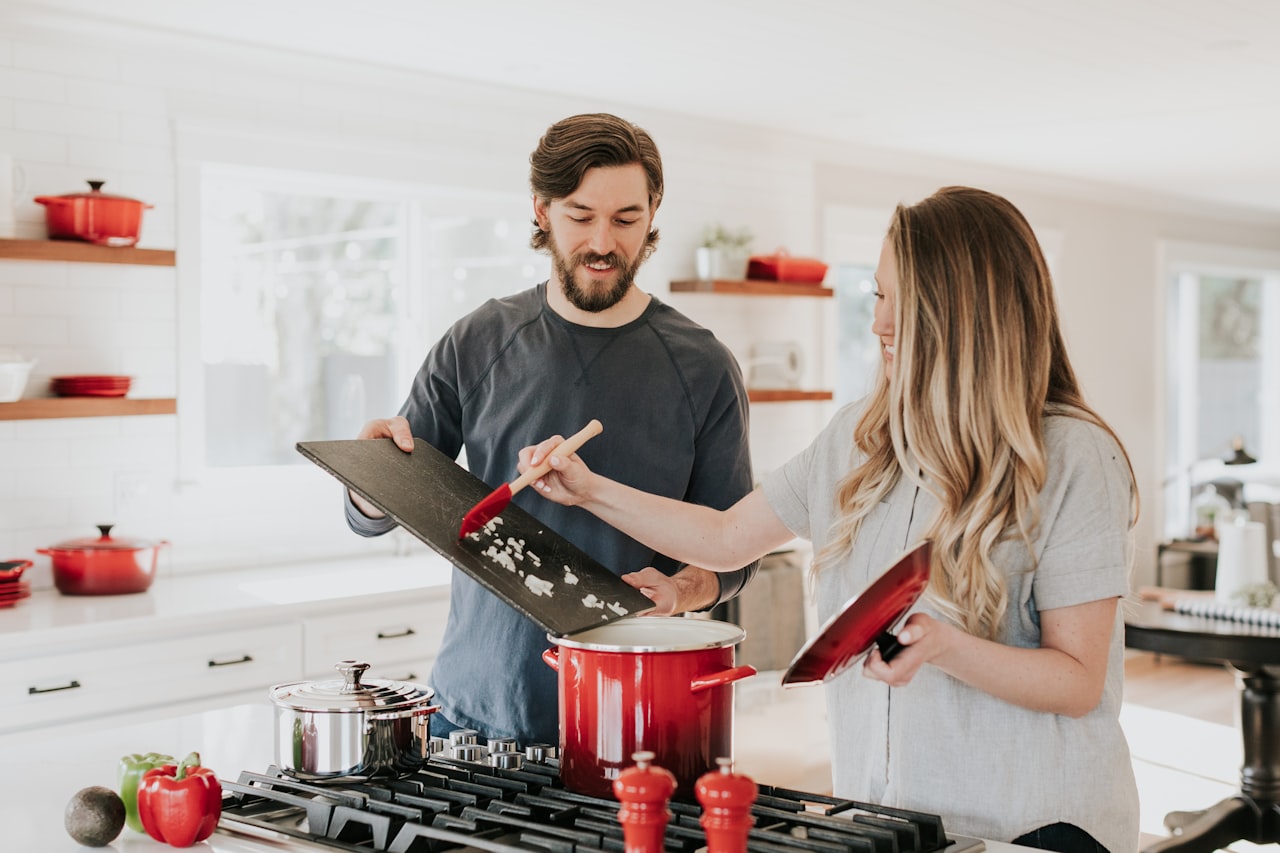
Sunday afternoon in our kitchen used to look like a small strategic operation. Cookbooks open on the counter, a shopping list halfway written, two kids asking for snacks, and a slow creeping feeling that if I did not solve the entire week in the next two hours the whole thing would fall apart by Wednesday. It rarely worked. What actually changed things was much smaller: a twenty minute block, a timer, and a decision to stop trying to cook ahead and start trying to remove decisions instead.
This is a walk through of that block. It is not batch cooking. It is not a freezer meal plan. It is a short, repeatable stretch of prep that carries a family of four through the middle of the week with less friction. You can do it standing at the counter with a podcast on. You do not need containers with matching lids.
What twenty minutes can actually do
Twenty minutes is not enough time to cook four meals. It is enough time to make three of the week’s decisions easier. That distinction matters, because most Sunday prep advice quietly assumes you have ninety uninterrupted minutes and a partner running interference with the kids. Most households do not.
The version I settled on covers three things: one protein cooked or marinated, one vegetable washed and cut, and one grain or carbohydrate started or fully done. That is it. Three components, sitting in the fridge on Sunday night, available to be assembled into two or three different Tuesday dinners without a full cooking session. The rest of the week’s meals still get made in real time. But the starting line moves closer.
The twenty minute block, step by step
Set a timer for 20 minutes. Not aspirationally. Actually set it. When the timer ends, you stop, even if something is unfinished. This is the part that keeps the habit from expanding into a two hour Sunday tax.
- Minutes 0 to 3. Preheat the oven to 400F. Put a sheet pan in it. Fill the electric kettle. Pull out one cutting board, one sharp knife, one sheet pan liner, and three storage containers.
- Minutes 3 to 8. Wash and roughly chop the week’s vegetables. Two or three is plenty: something for roasting (broccoli, sweet potato, carrots), something raw for lunches (cucumber, peppers, cherry tomatoes), something for a quick weeknight side (green beans, zucchini).
- Minutes 8 to 12. Toss the roasting vegetables with oil and salt, spread on the sheet pan, into the oven. Set a second timer for 25 minutes for the oven itself; that timer runs independently after your twenty minute block ends.
- Minutes 12 to 17. Cook or start one grain. A pot of rice, a pot of pasta, a batch of quinoa in the kettle water. If you are truly out of energy, cook nothing and just portion out one bag of pre-cooked grains into containers.
- Minutes 17 to 20. Marinate or season one protein. Chicken thighs in a bag with olive oil, lemon, salt, and garlic. Ground beef browned only if the pan is already hot. Tofu drained and pressed under a plate. This one gets cooked fresh on the night it is used, but the seasoning work is done.
At minute 20 the timer goes off and you walk away. The oven finishes on its own. The grain finishes on its own. You come back in half an hour to move things to containers.
Why the timer matters more than the food
The single thing that keeps this working, months in, is the hard stop. Without it, prep quietly grows. You start slicing an onion for tomorrow. You think you might as well make the salad dressing. Twenty minutes becomes fifty. The next Sunday, you feel a little more resistance. Three Sundays later, the whole thing collapses because it now feels like a chore instead of a small deposit.
A twenty minute cap keeps the emotional cost low enough that you will do it again next week. That repeatability is worth more than any single ambitious session. This is the same logic that runs through the rest of our meal planning and household systems pieces: small, boring, repeatable beats large, impressive, occasional.
A concrete Tuesday example
Here is what a specific week looked like recently. Sunday prep: a sheet pan of broccoli and sweet potato, a pot of white rice, four chicken thighs sitting in lemon and garlic in a zip bag. Total active time, 19 minutes.
Monday night we ordered pizza; the prep sat untouched, which is fine. Tuesday at 5:45pm, both kids doing homework at the kitchen table, I put the marinated chicken in a hot pan for 12 minutes. I reheated the rice with a splash of water in the microwave. The broccoli and sweet potato went back in the oven for six minutes to warm and crisp. Dinner was on the table at 6:08. Total Tuesday cooking time, roughly 15 minutes, most of it hands-off.
Wednesday, the leftover chicken got chopped into a rice bowl with the remaining sweet potato and a fried egg on top. Thursday, whatever was left became a lunch for me. This is the actual math: one twenty minute Sunday block covered parts of three meals across the week, not because it made the food, but because it removed the moment where I stand at the fridge at 5:40pm wondering what to do.
When it stops working
There are three failure modes I have watched happen, in my own kitchen and in friends’ kitchens.
The first is ambition creep, described above. The fix is the timer, and a willingness to accept an unfinished session as a success rather than a failure.
The second is shopping mismatch. If you buy the vegetables on Sunday morning intending to prep Sunday afternoon, you have added a whole errand to the block. Better to make grocery day and prep day different, or to use a delivery service, or to build the prep around whatever is already in the fridge from a mid-week shop. The USDA MyPlate shopping guidance has a reasonable, non-preachy framework for building a weekly list that does not assume you love grocery shopping.
The third is family scale mismatch. A twenty minute prep for a family of six with two teenagers who eat like adults is not really the same block as a twenty minute prep for a family of three with a toddler. If you are consistently running out of prepped food by Tuesday lunch, scale the quantities up rather than the time. Bigger sheet pan, more rice, same twenty minutes.
A short list of what to keep in the pantry
The prep gets easier when the surrounding pantry is stable. A short, honest list of what makes the twenty minutes possible in our house:
- Olive oil, kosher salt, black pepper, garlic powder, a good soy sauce, one hot sauce.
- Two grains you actually eat: for us, jasmine rice and a short pasta.
- One shelf-stable protein backup: canned beans, canned tuna, or eggs.
- Frozen vegetables you will actually reach for: peas and edamame work in our house; frozen broccoli does not.
- Lemons or limes. A jar of good mustard. Something acidic to finish a plate that tastes flat.
Nothing on this list is aspirational. If something has been sitting in your pantry for a year unused, it is not part of your real cooking; take it out.
How this connects to the rest of the week
A twenty minute Sunday only pays off if the rest of the week does not demand heroics. That usually means dinner is genuinely simple on weekdays, homework is not colliding with cooking, and the kids know roughly what to expect. We have written more about the homework side in our notes on homework and school routines, and about the evening handoff itself in our pieces on daily schedules.
If your evenings feel loud because everyone is landing in the kitchen at the same time hungry, the meal prep is probably not your real problem. The American Academy of Pediatrics writes about family meals in a way that has stayed useful for us: the point is being together, not the plate. A slightly boring dinner served calmly beats an impressive one served frazzled.
Permission to keep it small
If you try this and it feels underwhelming, that is the point. A good version of this block is quiet. Nothing dramatic gets accomplished. You wash some vegetables, you start some rice, you put chicken in a bag. Twenty minutes later, three future dinners have a head start and the rest of your Sunday is still yours.
You can read more about how we think about small household routines on our about page, or the way we approach practical advice in our editorial standards. If a version of this worked in your kitchen and you want to tell us, our contact page is open.