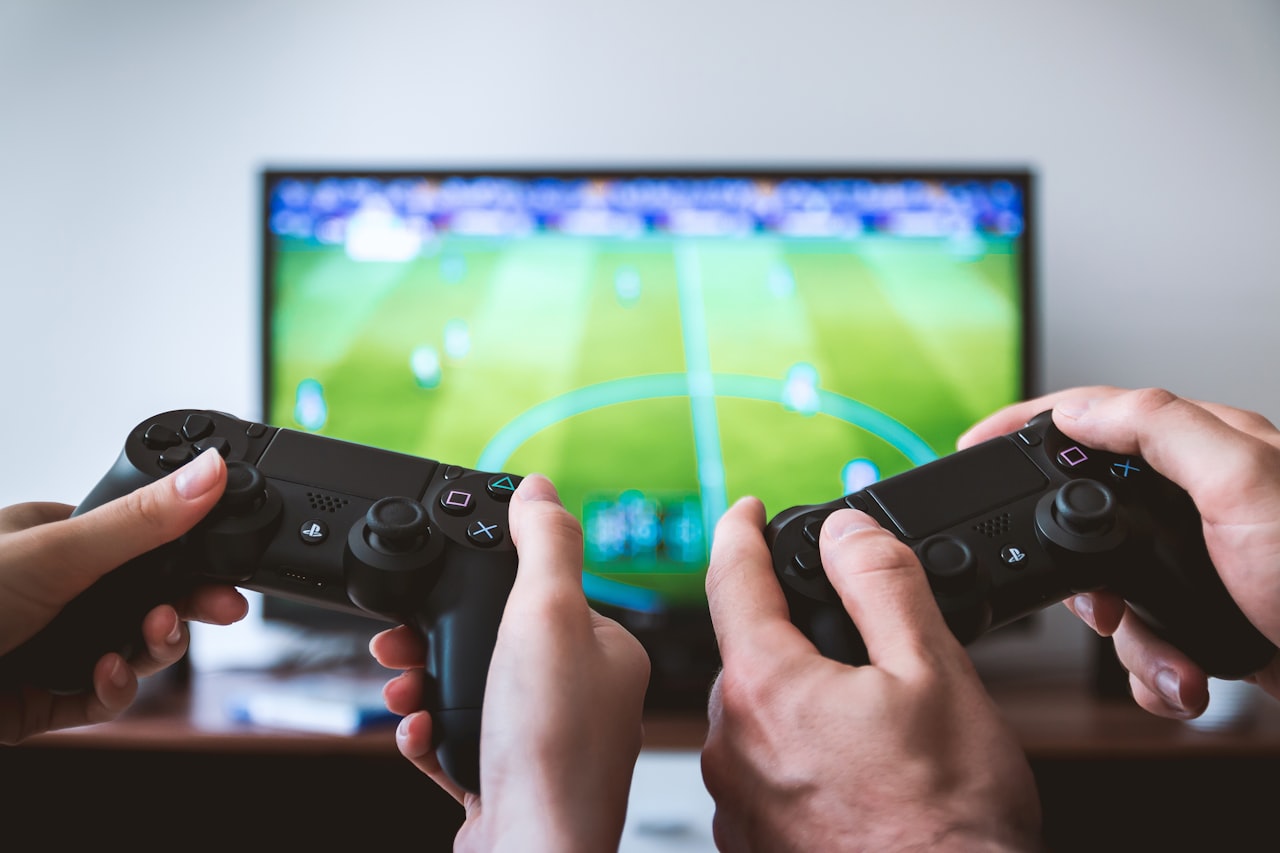
Gaming rarely blows up a school week in one dramatic moment. It leaks in around the edges: the twenty extra minutes before dinner, the controller carried to the breakfast table, the Sunday night meltdown when a raid ends at 9:47 and homework has not been opened. The routine below is for parents who are not trying to eliminate games, only trying to build a rhythm that lets a 7 to 12 year old play well and still sleep, eat, and finish fractions.
What the school week actually asks of a gamer
A school-aged child running a normal week already carries a stack of small transitions: wake up, get dressed, ride, sit for six hours, come home carrying whatever social weather happened at lunch. Games are one of the very few activities where they get to choose the pace, the friends, and the outcome. That is not a flaw. It is why the play matters to them and why prying the controller out of their hands at 8:59 pm goes badly.
The frame we use with parents is simple. On school nights, gaming should slot around three fixed anchors: dinner, homework, and the sleep window. Anything else, including how long they play or which game, is negotiable. The three anchors are not. When those three points on the day are stable, most other screen-time friction quiets down without a lecture.
The three anchors, and where play fits between them
Here is the shape most workable routines end up taking for kids in this age band. Yours will not match exactly, and it does not need to.
- After-school buffer (20 to 30 minutes). Snack, decompress, no screens. This is not a moral rule. It is a nervous-system rule. A child who has just spent 6 hours in a classroom is not ready to make good decisions about when to log off.
- Homework block (30 to 60 minutes). Done at a table, with a visible end. Play is the reward on the other side, and everyone knows it.
- Play window (45 to 75 minutes). Named in advance. A specific stop time. Parent gives a 10-minute and a 2-minute warning, out loud, from the same room.
- Wind-down (60 minutes before sleep). Screens off. The Sleep Foundation and the AAP’s HealthyChildren guidance both put 6 to 12 year olds at 9 to 12 hours of sleep. Back that out from a 6:45 alarm and the numbers get honest quickly.
- Sleep window. Lights out at the time you calculated in step 4, not the time you wished for.
If you count carefully, that leaves roughly 45 to 75 minutes of active play on a school night, plus whatever streaming or watching happens with the family later. Weekends can be looser. Most families we hear from land somewhere between 60 and 90 minutes on school nights, and 2 to 3 hours on weekend days, and that is not a failure. That is normal.
Choosing the stop time before the play starts
The single change that shifts more evenings than any other: agree on the log-off time before the game boots up. Not during. Not after the 2-minute warning. Before.
This costs about 15 seconds and sounds like, “Okay, you have from 5:20 to 6:30. Dinner is at 6:35. Pick a game that ends in one round or find a save point by 6:28.” You are not asking for compliance. You are handing them the information they need to plan their own play. Most 9 year olds respond surprisingly well to being trusted with the clock, as long as the clock is not a surprise.
Games with no natural stopping point (open-world builders, competitive shooters with 25-minute matches, MMOs) need extra help. Ask before they load in: “How long is a match?” and “What happens if you leave in the middle?” Sometimes the honest answer is that a specific game does not fit a 45-minute window on a Tuesday, and it becomes a weekend game.
A Tuesday that actually held together
A dad we spoke with described his 10 year old’s Tuesday like this. School ends at 3:15. The bus lands him home at 3:52. He eats a bagel and lies on the rug with the dog for 20 minutes. At 4:15 he starts math and reading at the kitchen table. Done by 5:00 on a good day, 5:20 on a hard one. He plays from 5:20 to 6:30, dinner is on the table at 6:35, and the console is off by 6:30 because he already knows dinner is coming and does not want to fight about it.
After dinner he reads or watches something with a sibling until 7:45. Teeth, shower, book. Lights out 8:30. He gets almost 10 hours of sleep and wakes up without being dragged. It is not glamorous. It works because every piece of it was decided once, calmly, on a Sunday afternoon, and then repeated until nobody had to think about it.
If you want to build something similar around your own family’s timing, our notes on homework and school routines and sleep and daily schedules pair naturally with this one.
When the routine falls over
It will fall over. Usually in the second week, once the novelty wears off and a friend joins a new server on a Thursday. Here are the failure modes we see most, and what tends to help.
- The 2-minute warning becomes 20 minutes. The fix is not stricter enforcement. It is looking at whether the stop time was realistic for the game they chose. If you keep colliding at 6:30, move the play window earlier, or accept that certain games are Saturday games.
- Homework quality drops. Often this is not a gaming problem. It is a decompression problem. Push the buffer to 30 minutes and see what happens.
- Sleep slips by 45 minutes on Fridays. Fine. Fridays are for slipping. Protect Sunday night instead. A rested Monday matters more than a perfect Friday.
- Voice chat gets ugly. This is a separate conversation, not a routine problem. Common Sense Media has usable guides on chat controls per platform.
None of these mean the routine is broken. They mean it is being used.
A quick table for the age range
Rough school-night ranges we have watched work. Adjust to your child, not the chart.
| Age | Play window | Screens off before bed | Sleep window |
|---|---|---|---|
| 6 to 7 | 30 to 45 min | 60 min | 10 to 11 hours |
| 8 to 9 | 45 to 60 min | 60 min | 9.5 to 11 hours |
| 10 to 12 | 60 to 75 min | 45 to 60 min | 9 to 10 hours |
These are not prescriptions. A child in a demanding sport season may need less play and more rest. A child recovering from a hard social week may need more play and a lighter homework touch. You are the one holding the whole picture.
Weekends, sick days, and the messier weeks
Weekend gaming does not need the same architecture. What it does need is a soft cap and a mid-day break. Two to three hours of play, ideally not in one uninterrupted block, with a lunch and some outdoor time in the middle, holds up better than a single 4-hour session that ends with a tired, irritable kid at 3 pm.
Sick days and school breaks are a separate category. Kids will play more. That is fine. Keep the sleep window steady even when everything else drifts, and the re-entry on Monday is far kinder. If gaming starts to crowd out meals, movement, or time with the rest of the household, that is the signal to trim, not the raw hour count.
Talking about it without a speech
The routine works better when it is co-authored. Sit down with your 8 or 11 year old on a Sunday, ideally before anyone is hungry, and ask three questions: What game do you want time for this week? What time do you want to play? What time do you want dinner? Write the answers on a card and stick it to the fridge. That single act does more than any lecture about screen limits.
If you want more on how to hold conversations like this without it turning into a negotiation, our pieces on screen time and technology and sibling and family communication go into the language in more detail. Our editorial standards and about page explain how we test the routines we publish.
A small closing thought
A gaming routine is not a moral position on video games. It is a scaffolding for the rest of the week to stand on. Get the three anchors steady, name the stop time before the play starts, and let the middle of the day be a bit loose. If something in this piece does not fit your family, ignore it. If you want to tell us what did work, our contact page is the place.