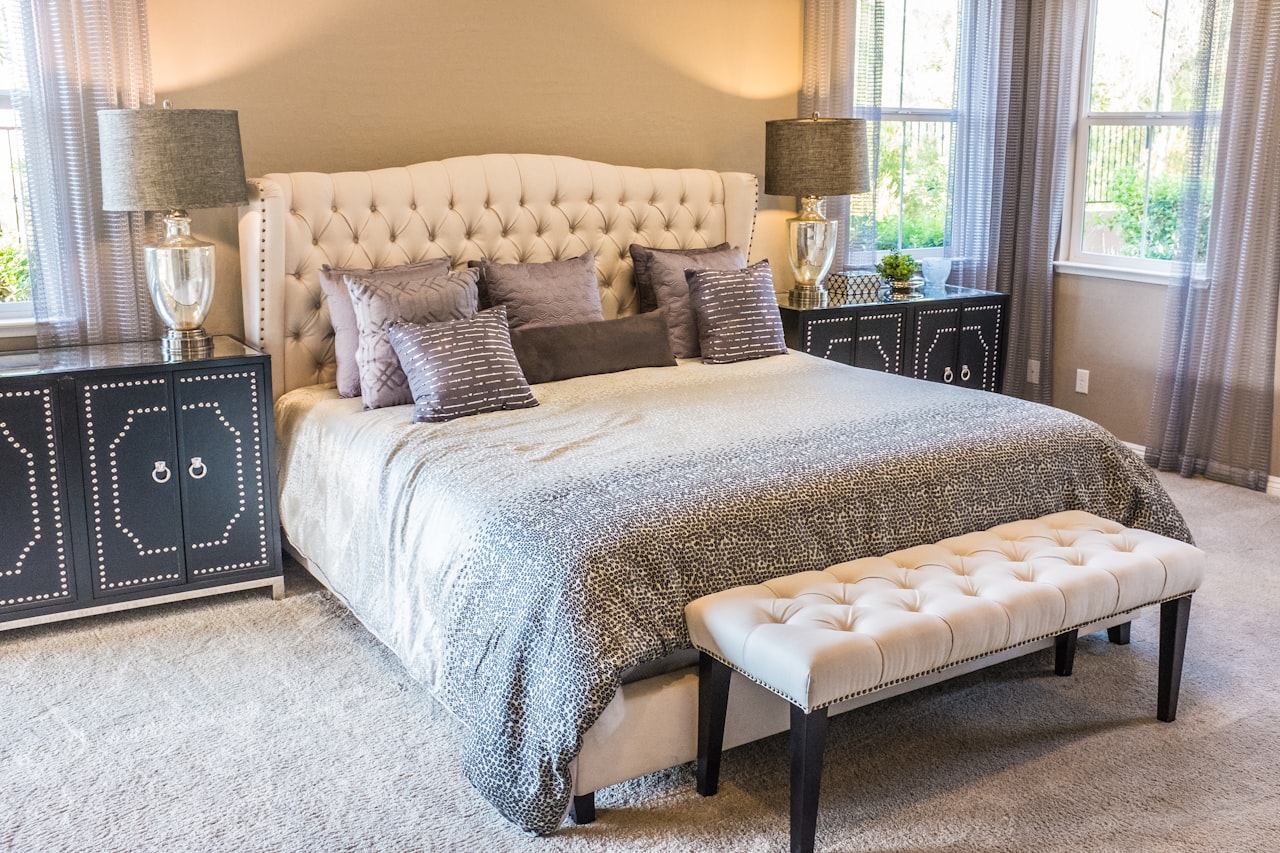
Around 6:45 one Tuesday, I flipped the overhead light off in my daughter’s room and switched on a small lamp on her dresser instead. Nothing else changed. She kept building her Lego. I kept folding laundry. But by 7:20, the wind-down that usually took forty minutes had somehow finished itself. That small accident is the reason this article exists.
Bedroom lighting sounds like a decor topic. In practice, it is a scheduling tool. The bulbs you use, and when you use them, quietly tell everyone in the house what part of the day it is. Kids read those cues faster than we give them credit for, and they push back against the wrong ones almost immediately.
What the ceiling bulb is actually doing at 7pm
Most standard ceiling fixtures run somewhere between 2700K and 4000K, and many of them are far brighter than the room needs after dinner. The brain reads that flat, cool, top-down light the same way it reads mid-afternoon: alert, task-ready, keep going. That is the opposite of what a 7-year-old’s body is trying to do at 7:15pm.
The American Academy of Pediatrics has written for years about how consistent evening cues help children settle. Light is one of the strongest cues, and the easiest to change. You do not have to lecture a tired kid about sleep hygiene. You can just change the bulb they are standing under.
The goal is not darkness. It is a lower ceiling of stimulation. The room should feel like a slower version of itself, not like a cave.
The one-lamp rule we use after dinner
Here is the structural piece, and it is genuinely small. After the dinner dishes go in the sink, the overhead lights in the bedrooms stay off for the rest of the evening. One warm lamp per room does the whole job.
A single 40 to 60 watt equivalent bulb in the 2200K to 2700K range, placed low (dresser, nightstand, floor), changes the entire feel of a bedroom in about ten seconds. Kids who resist bedtime often stop resisting the room itself once it stops shouting at them.
If you want a starting checklist for a single bedroom, this is the whole thing:
- One warm-white bulb, 2200K to 2700K, under 800 lumens.
- Placed below eye level when the child is standing.
- On a switch or plug the child can reach without help.
- Overhead fixture off from about 7pm onward.
- Hallway light dimmed or swapped to a similar warm bulb.
Total cost, if you are starting from nothing: usually 15 to 30 dollars per room. Total setup time: about one evening.
A real Tuesday, start to finish
The evening I mentioned at the top ran like this. Dinner ended at 6:30. Dishes and a short walk-around tidy took us to 6:45. Instead of the ceiling light, I clicked on the dresser lamp, and my daughter’s room dropped into a soft amber that made the Lego bricks look almost warm.
She played for another twenty minutes without a single check-in. At 7:10 she wandered to the bathroom on her own, which never happens when the hall is glaring. Teeth, pajamas, two books, and she was asleep by 7:55. The only variable was the light. Same dinner, same sister, same me.
I am not claiming this works every night. It does not. But it works often enough that we stopped touching the overhead switch in either kid’s room after 7pm, and the average bedtime slid earlier by about eighteen minutes over the following month.
When it does not work, and why
The most common failure mode is a mismatch between the bedroom and the rest of the house. If the kitchen and living room are still blasting cool overhead light at 8pm, a warm bedroom feels like an exile, not a wind-down. Kids drift back out to where the light is brighter, because that is where the day still seems to be happening.
The fix is not to dim the whole house at once. It is to move the warm-light zone outward one room at a time. Start with bedrooms, then the hallway, then a single lamp in the living room. Give it a week between changes. If you do the whole house in one Sunday, someone will resent it by Wednesday.
The second failure mode is screens. A tablet at 400 nits will override the softest lamp in the room. If screens are part of your evening (they are part of ours), consider pairing the lighting shift with a screen boundary, which we wrote about in our notes on screen time and technology.
A quick comparison of bulb choices
If you have never bought bulbs with color temperature in mind, the numbers on the box can feel arbitrary. Here is what actually matters for a kid’s bedroom after dinner:
| Bulb | Color temp | Feels like | Good for evening? |
|---|---|---|---|
| Standard “soft white” | 2700K | Warm indoor lamp | Yes, this is the baseline |
| Amber or “sunset” | 2200K | Candlelight | Yes, best for last 30 minutes |
| “Bright white” | 3500K | Office lobby | No, too alert |
| “Daylight” | 5000K+ | Noon outside | No, actively unhelpful |
A smart bulb that shifts from 2700K to 2200K on a schedule is nice but not required. A plain amber bulb in a plain lamp does 90 percent of the work for about 8 dollars.
Fitting this into the rest of the evening
Lighting on its own is a lever, not a routine. It works best when the other parts of the evening are pointing the same direction. Dinner at a roughly consistent time, a short reset of the shared spaces, and a predictable order of pajamas, teeth, book. If those pieces are shaky, our writing on sleep and daily schedules is a gentler starting point than lighting.
For families juggling siblings on different bedtimes, the warm-light rule actually helps more, not less. The older sibling’s room can stay warmly lit for another hour without disturbing the younger one, because the hallway is no longer acting like a runway. We touched on some of this in our notes on sibling and family communication.
If your evenings also carry homework, the light matters there too, but in the opposite direction. Homework wants a cooler, brighter task lamp on the desk itself. That is a different question, covered in homework and school routines.
Making the swap without a family meeting
You do not need to announce this. Buy two bulbs on a Tuesday, install them Wednesday after school while the kids are having a snack, and just use them at 7pm. Most kids do not notice for two or three evenings, and then they notice because the room feels nicer, not because a rule appeared.
If a child asks why the big light is off, a small honest answer works: the lamp is easier on our eyes at night. That is true. It is also the whole reason. You are not selling a philosophy, you are changing a bulb.
Give it two weeks before you decide whether it helped. The first three days are novelty. The real signal shows up around day 10, when bedtime resistance either has softened or has not. If it has not, the lighting is not the load-bearing problem, and you can move on to look elsewhere without having spent much.
What we are not saying
We are not saying lighting fixes bedtime. We are saying it removes one steady source of friction that most families never think to look at. If your evenings are hard for bigger reasons, and many are, the bulb is not going to carry that weight.
We also try not to over-engineer this on the site. If you want to know how we think about small structural changes generally, our editorial standards page explains the posture, and our about page covers who is writing. If something here worked for your household, or very much did not, we do read the notes that come through contact.
Try the lamp on a Tuesday. See what Thursday feels like. That is really the whole experiment.