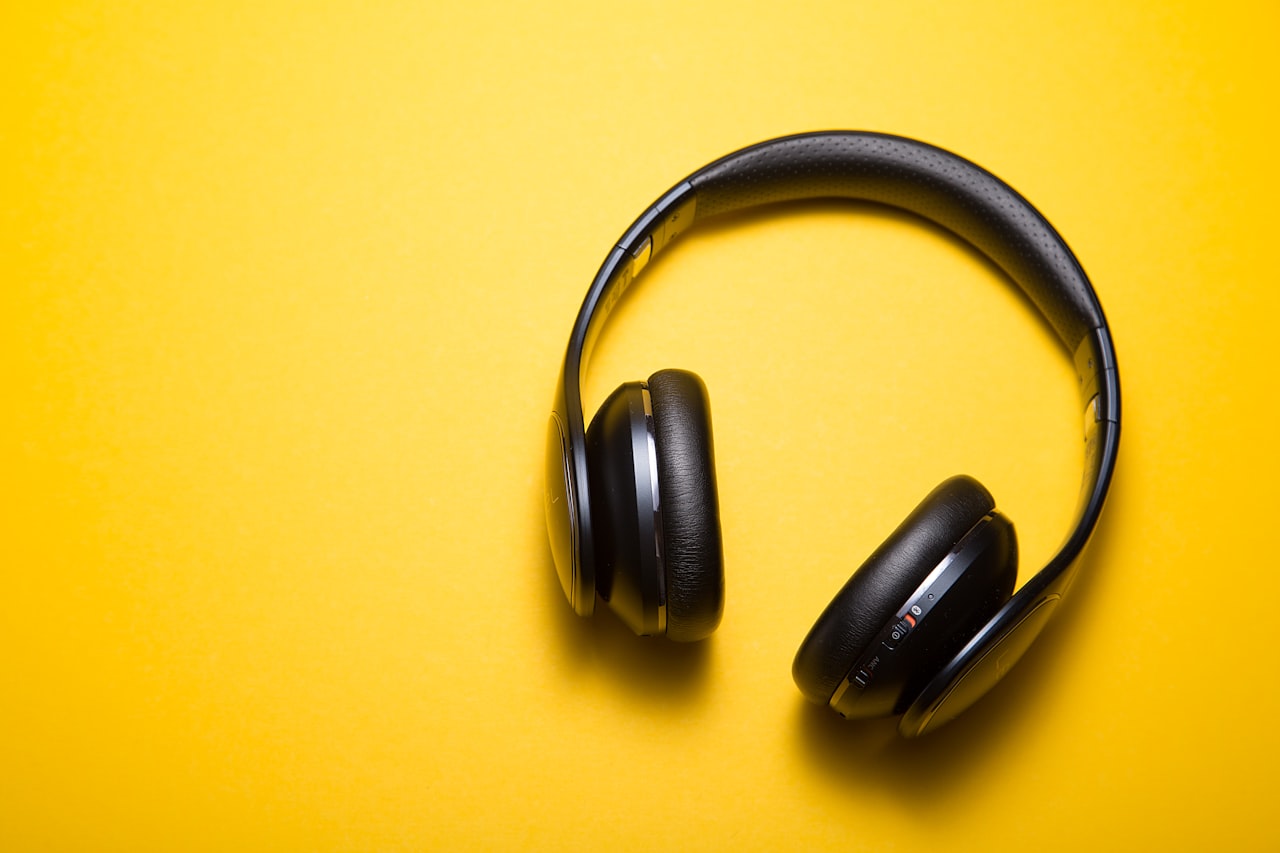
Most homework tables have a soundtrack, whether anyone chose it or not. The dishwasher runs, a sibling narrates a video game two rooms away, someone opens a bag of chips, and a ten-year-old is trying to remember what a compound sentence is. What plays in the background is not neutral. It shapes how long the child can stay with the page, and it shapes how the rest of the evening feels for you.
This piece is about the small audio choices that decide whether the next 40 minutes of schoolwork feel like a struggle or a quiet stretch of work. Not perfect silence. Not curated playlists with names like Deep Focus. Just a handful of rules that most families can apply on a Tuesday, with whatever speaker or pair of headphones is already in the house.
What the research actually says about background sound
The short version: lyrics are the loudest lever. When a child is reading, writing, or doing anything that involves language, songs with words compete with the language center of the brain and slow the work down. Instrumental music, or no music at all, generally leaves that channel free. This holds across most age groups from about 8 upward, though the effect is stronger for tasks that are already hard for the child.
Steady, low-information sound tends to help more than variable sound. A fan, a distant hum, or gentle instrumental tracks all fall into that category. Sudden noises, unpredictable voices, and lyric-heavy pop do the opposite. The American Academy of Pediatrics writes about consistent daily routines as a way to reduce that ambient friction, and the same logic applies to the sound layer inside the routine.
None of this means classical music makes a child smarter. It just means the room is doing less work against them.
The four simple rules we use
Here is the shortlist we hand parents when they ask. It is short on purpose. If a child under 12 tries to protest, you can point at the rules and blame us.
- No lyrics during reading or writing. Instrumental only. Video game soundtracks count as instrumental and are often welcome.
- Lyrics are fine for math worksheets, art, and copying. Anything that does not use the language part of the brain.
- One speaker in the room, not two. Competing audio, even at low volume, is worse than one louder source.
- The child picks, within the rules. Autonomy on the playlist buys you cooperation on the homework.
These four cover about 80 percent of the arguments we used to have about noise during homework. The remaining 20 percent are usually about volume, and volume is easier to negotiate once the type-of-sound question is settled.
A Tuesday I keep thinking about
A mom I know has three kids: 9, 11, and 14. The 11-year-old had been melting down over reading homework roughly twice a week. The living room had a TV playing on low, the kitchen had a smart speaker running a pop playlist, and the 9-year-old was doing math at the same table with headphones in but leaking sound.
She changed one thing. The TV went off, the smart speaker switched to a lo-fi instrumental station, and the 9-year-old’s headphones got swapped for a pair that actually stayed in. Volume stayed roughly the same. The 11-year-old finished the reading in 22 minutes instead of the usual 45, and did not cry. It was not magic. It was that the room stopped fighting her.
She kept the setup for three weeks, then let the pop playlist creep back on a Friday and watched the meltdown come back. Then she stopped experimenting.
Matching sound to the task
Not every homework block wants the same audio. A rough guide:
| Task | What tends to work | What to avoid |
|---|---|---|
| Reading a chapter | Silence or soft instrumental | Any lyrics, TV in the next room |
| Writing a paragraph | Silence, white noise, video game soundtracks | Podcasts, pop music, siblings talking |
| Math practice | Lyrics allowed, familiar playlists | New songs the child wants to react to |
| Studying for a test | Same audio as when they will take the test (usually silence) | Anything they will not have on test day |
| Art, coloring, crafts | Almost anything, including audiobooks | Nothing really, this is a free zone |
The test-day rule is the one parents tend to miss. If a child studies with lyric-heavy music every night and then takes the test in a silent classroom, the brain has to relearn how to focus without its usual soundtrack. Matching study conditions to test conditions is a small, boring thing that helps.
When it stops working
A few patterns show up when the audio rules quietly fall apart. If any of these sound familiar, the fix is usually smaller than you think.
The playlist becomes the event. A child spends 8 minutes choosing what to play before opening a single book. Solution: pick the playlist the night before, or hand them three pre-approved options and let them choose in under 30 seconds. Choice is fine. Curation as procrastination is not.
Volume creeps up over a week. Every evening it goes up two notches until you are hearing bass through the wall. This happens to everyone. Reset the volume together on Sunday evening as part of your weekly reset for sleep and daily schedules. Nobody is in trouble. It just drifts.
Headphones become a hiding place. A child puts them on and stops responding to being spoken to. This is worth naming, gently. Headphones during homework are for sound, not for social exit. If you notice this pattern for more than a week, it usually means something else is going on. The Common Sense Media guidance on talking with kids about media is a decent starting point for that conversation.
Where to put the child and the speaker
The setup matters as much as the sound. Three small placement choices we suggest:
- Face the child away from the busiest doorway in the house. Movement in peripheral vision costs focus even when it is silent.
- Put the speaker at least 6 feet from the child’s head, and slightly behind them if possible. Sound in front pulls attention forward.
- Keep phones in a different room during reading and writing blocks. Not on the table face down. In a different room. A phone across the table is a low-grade audio and visual interruption even when it does nothing.
If two siblings share a homework table, headphones for at least one of them are worth the small cost. Wired earbuds under $15 last longer than wireless ones for this age group and never need charging in the middle of a math worksheet. This ties into how you handle sibling and family communication generally: separate sound environments reduce the number of small conflicts you have to referee.
How this fits into the rest of the evening
Homework sound is one layer of the bigger evening system. If your homework and school routine already has a clear start time and a clear end, the audio question becomes lighter. If it does not, sound alone will not save you.
A working version we see often: 15 minutes of quiet body-moving after school, then a 5-minute snack, then a 30 to 45 minute homework block with agreed-upon audio, then the audio changes to signal the block is over. Some families use a specific song as the closing bell. It becomes part of the pattern the child stops arguing with, because the pattern is doing the work.
If your evenings involve dinner prep at the same time, the meal planning and household systems side of things matters here too. A kitchen full of chopping and sizzling is its own soundtrack, and it is not a bad one. It is just worth being honest that a child doing reading homework 4 feet from a hot pan is fighting a losing battle.
A small permission to keep it imperfect
You do not need to build a study nook or buy a white noise machine. Most of what helps here costs nothing and can be tried tonight. Turn one thing off. Move the speaker. Ask the child what kind of sound they think will help them, and take their answer seriously the first time.
If this piece was useful, our editorial standards page explains how we write, and you can always reach us through contact if a specific evening pattern in your house has us stumped. There is no single right way to sound your homework hour. There is only the way that lets your particular kid finish their reading and still like you at bedtime.