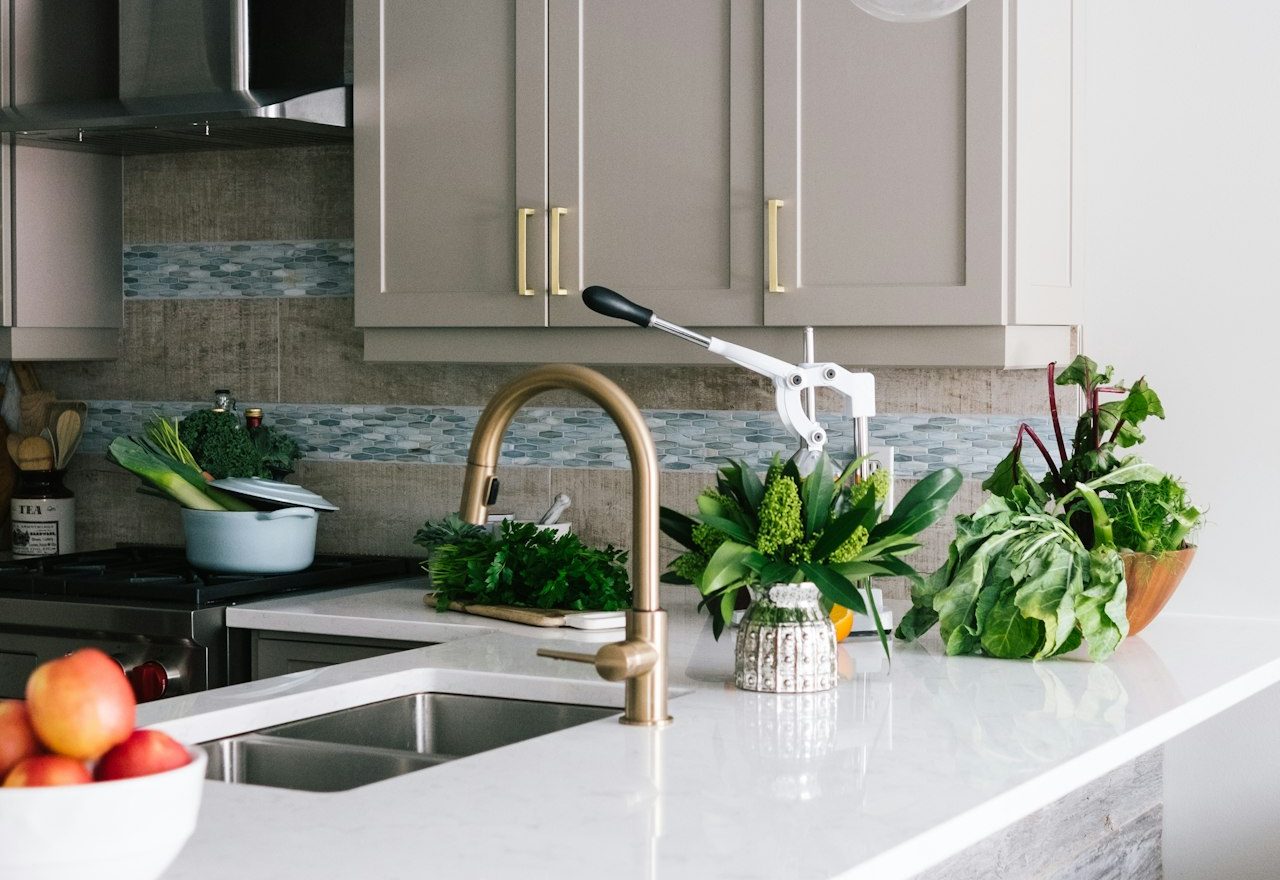
Our kitchen counter used to be a graveyard for the day. Two lunchboxes, a permission slip curling at the edges, a hoodie balled into the fruit bowl, three envelopes we had not opened, a library book due Thursday, and a small pile of receipts nobody would ever read. By 7pm it had a quiet gravitational pull. Anything set down there stayed for four days minimum.
The rule that changed our evenings is embarrassingly simple. It took about 20 seconds to explain to the family and roughly three weeks to feel normal. I want to walk through it honestly, because the framing matters more than the mechanics.
What the rule actually is
The counter closest to the back door gets cleared to bare surface once a day, at the same time every day, by whoever is nearest. In our house that time is 6:45pm, right before dinner plates go down. Nothing lives on that counter overnight. Not a bill, not a set of keys, not a snack wrapper, not a school folder waiting for a signature.
That is it. One counter, one time, one clearing pass that takes between 90 seconds and four minutes depending on the day. Everything on the counter either goes to its real home, gets handled on the spot, or moves to a small labeled tray we keep in the hallway for genuine in-between items.
Why one counter and not the whole kitchen
The instinct is to fix everything. Clear all surfaces, wipe every crumb, teach the children to put their shoes away. That version of the rule failed in our house twice before I gave up on it. It was too big to do on a Tuesday when someone had a fever and the dishwasher was leaking.
One counter is small enough that the tired version of you can still do it. That is the whole design brief. A rule you can keep on your worst weekday is a rule that will still be running in six months. The chores and home organization pieces on this site keep circling back to that idea because it keeps proving true.
Picking the right counter
The counter that matters is the one that collects things by default. Watch your family for two or three days without changing anything. The winner is usually one of three suspects:
- The counter closest to the door you actually use (not the front door, the real one).
- The counter next to the kettle or coffee machine, because everyone stands there twice a day.
- The counter beside the fridge, because that is where snacks and mail collide.
Pick the one that gathers the most in a normal week. Do not pick the tidiest one because it looks like an easy win. The point is to put the rule where the mess already lives, so the payoff is visible within a day.
The 6:45 clearing, step by step
Here is exactly what happens in our kitchen, in the order it happens. It runs the same on a good day and a rough day.
- Whoever is closest calls out that the counter is closing in five minutes. No drama, same tone as saying the pasta is nearly done.
- Each person walks over and takes their own things. Kids take theirs too, from about age 5 upward. Younger than that, we help.
- Papers get sorted into three piles on the spot: sign now, read tonight, recycle. There is no fourth pile.
- The sign-now pile gets signed at the counter before it leaves. This is the single biggest change we made.
- Anything genuinely homeless goes into the hallway tray, which gets emptied on Sunday morning while the kettle boils.
The whole thing takes less time than loading the dishwasher. On a hard evening it might stretch to five minutes. That is still shorter than the argument we used to have on Thursday when a permission slip surfaced 40 minutes before school.
What we noticed after three weeks
The first week felt like extra work. The counter kept refilling within an hour because everyone had years of muscle memory pointing them toward that spot. Week two, the refill rate slowed. By week three, the counter was clear more often than not, and the tray in the hallway had become the actual in-between zone.
The unexpected part was how much it changed the mood at dinner. A cleared counter next to the table meant nobody was looking sideways at a stack of paperwork while eating. Small thing. Real difference. It is the same principle that shows up in our writing on meal planning and household systems: the surface around a meal shapes the meal.
Common ways this falls apart
The rule has broken in our house maybe eight or nine times. Every failure had the same shape. Someone (usually me) tried to expand it. Two counters instead of one. A morning clearing added to the evening one. A stricter definition of what counts as a genuine in-between item. Each expansion killed the rule within a week.
The other failure mode is turning it into a performance. If the clearing pass becomes a moment where you comment on what your partner or kids left there, the rule stops being infrastructure and becomes a complaint. Nobody wants to walk toward a nightly critique. Keep the clearing wordless where possible. The counter is not a character study.
The third failure, which caught us off guard, is Sunday. If the hallway tray does not get emptied on Sunday, it becomes its own counter within 10 days. The tray is not a solution, it is a delay. It needs its own quiet appointment.
How this connects to the rest of the week
A clear counter at 6:45pm does not fix bedtime, homework, or laundry. It does, however, remove one small argument from the evening and give you a visible marker that the day has turned. Our children now use the clearing as an unconscious cue that dinner is close. That is worth something on a Wednesday.
If you want to pair this with one other small structural change, the two that fit most naturally are a Sunday tray-empty and a five-minute morning shoe check. Both are covered in our homework and school routines and sleep and daily schedules pieces if you want more shape around them. The American Academy of Pediatrics has some useful background on why consistent household routines help children feel steadier, which you can read at HealthyChildren.org. It is not the point of this article, but it is worth knowing.
A specific Tuesday, for texture
Last Tuesday the counter had: two lunchboxes, a field trip form, a hair tie, a jar of peanut butter with no lid, an Amazon return envelope, a receipt from the vet, and a small ceramic frog my daughter had made at a friend’s house. At 6:45 the lunchboxes went to the sink, the form got signed with a pen we keep in the drawer directly below the counter, the peanut butter went to the pantry, the return envelope went to the hallway tray, the receipt got photographed and recycled, and the frog got a shelf in her room.
Total time: three minutes, 20 seconds. Nobody argued. Dinner started at 6:50. That is the whole promise of the rule. Not transformation, just three minutes of order at the hinge point of the day.
If you want to try it this week
Pick one counter tonight. Choose a time that already exists in your evening, ideally right before a meal or right before a screen goes on. Tell the household once, without ceremony. Run it for seven days without expanding it. On day eight, notice what happened to the counter and to the mood around it.
If you have questions about how we write about small household systems, our editorial standards page explains the approach. Anything specific to your family, the contact page is open, and you can read more about the team on about. The rest is just you and one counter, once a day, at the same time.