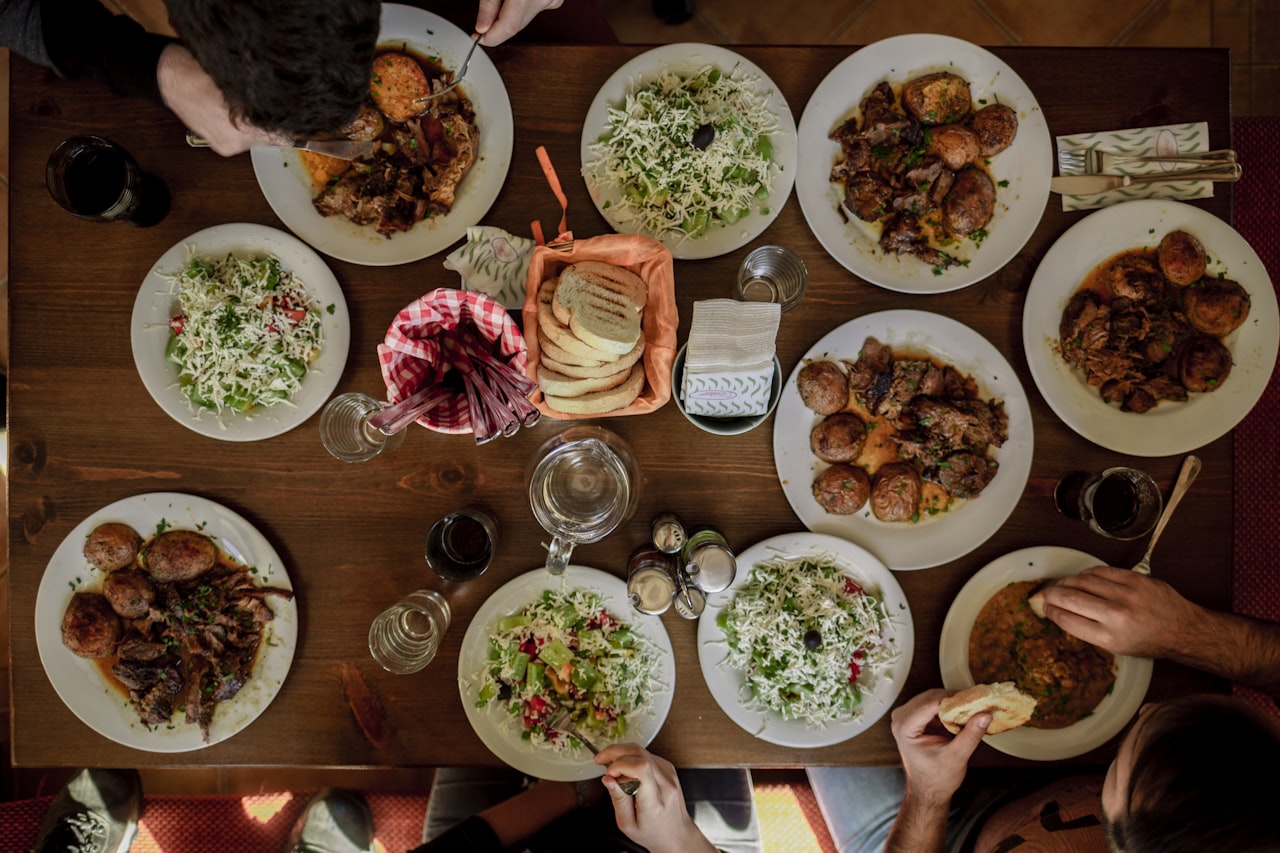
The question that ate our Wednesdays for years was not what should we eat. It was who is going to decide, and when, and using what part of their tired brain. The six dinner rotation is our answer to that question, and it is much less clever than it sounds.
The problem is decision fatigue, not cooking
Most weeknight dinner stress is not about knife skills or ingredients. It is about the number of small choices a parent makes between 4:30 and 6:15 in the evening. What is in the fridge. Who is home. Who has practice. Whether the 8 year old will eat peppers this week or has decided peppers are now the enemy. Each of those choices is small. Together they cost more energy than the cooking itself.
A rotation removes the biggest of those choices, which is the choice of what to make. It does not remove the cooking, the shopping, or the child who suddenly announces they are vegetarian on a Tuesday. It just quietly hands you the answer to one question every day at 4:45pm.
We landed on six because seven felt like a promise we could not keep, and five felt like we would be eating tacos every Friday until the youngest left for college. Six lets one night a week float. That floating night is where the rotation actually survives real life.
What the six slots look like at our house
Every family will fill these differently. What matters is that the shape stays consistent, not that the recipes do. Here is the frame we use, which took us about three months to settle on.
- Monday, pasta or noodles. Something that reheats and forgives a late soccer pickup.
- Tuesday, sheet pan or tray bake. One protein, two vegetables, 25 minutes at 400F, minimal dishes.
- Wednesday, breakfast for dinner. Eggs, toast, fruit, whatever. This is the low energy anchor in the middle of the week.
- Thursday, soup or stew with bread. Made Sunday or pulled from the freezer.
- Friday, tacos, wraps, or bowls. A build your own night that handles picky eaters without a separate menu.
- Saturday, leftovers or takeout. The honest slot. No pretending.
Sunday is the floating night. Sometimes it is a real cooking project. Sometimes it is grilled cheese at 7:30 because someone had a birthday party and we forgot to plan. Sunday floats on purpose so the other six do not have to.
The setup that took one weekend
We spent about 40 minutes on a Saturday morning writing the six categories on an index card and taping it inside a cabinet. That was the entire ceremony. The rest of the work happened in the ordinary flow of the following two weeks.
What helped most was a running list of three or four meals for each slot. Not recipes, just names. Under Tuesday sheet pan, we wrote: chicken thighs and potatoes, salmon and broccoli, sausage and peppers, tofu and sweet potato. Under Monday pasta, we wrote five options. That is it. When the 4:45pm question arrived, we looked at the card, picked the version that matched what was in the fridge, and moved on.
The grocery list rewrote itself after week two. We stopped buying ingredients for meals we hoped we would feel like making. We started buying the eight or ten items that repeated across the rotation. Our weekly grocery bill dropped by about 15 percent, though that was a happy side effect, not the goal.
A Tuesday that used to be bad
Before the rotation, Tuesdays broke us. My partner picked up the middle kid from swim at 5:40. The youngest hit her wall around 6:00 regardless of what was happening in the kitchen. I would open the fridge at 5:15, see three half-used vegetables, and text a photo of them asking what to make. By 6:30 we would be eating something sad on the couch and blaming each other quietly.
The first Tuesday of the rotation, I roasted chicken thighs and cut potatoes at 4:50 while the youngest colored on the kitchen floor. Dinner was on the table at 6:05. Nobody said it was delicious. Nobody had to. It was hot, it was Tuesday food, and I had made zero decisions after picking up the sheet pan. That was the win. Not the meal. The absence of the meal question.
When the rotation stops working
It will stop working. Ours has broken at least four times in two years. Each time, the failure looked different, and each time the fix was to make the rotation smaller, not bigger.
The most common failure is slot creep, where Wednesday breakfast-for-dinner slowly becomes a real dinner because you started feeling guilty about eggs. Let the eggs win. Wednesday is supposed to be low effort. If you upgrade Wednesday, you are borrowing energy from Thursday, and Thursday will collapse.
The second failure is ambition drift. You start with four sheet pan options and try to add a fifth that involves marinating something overnight. The rotation was built to be boring. Boring is the feature. If you want a cooking project, put it on the floating Sunday, where it belongs.
The third failure is family veto. A kid decides they hate soup. It happens. Swap the slot theme, not the whole rotation. Thursday can become grain bowls for six weeks and then quietly return to soup in October when nobody is watching.
What this does for the rest of the week
The rotation is not really about dinner. It is about protecting the 90 minutes between 4:30 and 6:00, which is one of the tightest windows in a family day. Getting that window back changes what is possible in the evening. Homework happens more calmly when the parent is not spiraling about proteins. Bedtime slides earlier by 10 or 15 minutes, which matters more than it sounds like it should.
If you have been working on other pieces of the week already, this pairs naturally with a steadier sleep and daily schedule and with the kind of low friction chores and home organization that keep the kitchen from starting the evening already messy. It also takes pressure off the after school stretch, which is where a lot of homework and school routines quietly fall apart.
For families where mealtime has become a flashpoint between siblings, the predictability of a rotation can also lower the temperature of ordinary sibling and family communication at the table. Nobody is negotiating the menu, so there is less to negotiate at all.
A few honest limits
The rotation will not help if the underlying problem is that one adult is doing all the cooking and quietly resenting it. That is a household conversation, not a menu problem. It also will not help if the kitchen is stocked for a family that no longer exists, which is common when kids move from toddler eating to real-portion eating around ages 8 to 10.
Nutritionally, six repeating slots can actually improve variety over time, because you are cooking on purpose instead of defaulting to the same three panic meals. The American Academy of Pediatrics guidance on family nutrition is a useful reality check if you want to audit what your week actually contains. We looked at our rotation after month two and realized we had almost no fish. We added salmon to the Tuesday list and moved on.
If you want a broader sense of how family meals fit into child wellbeing beyond nutrition, the CDC’s parenting resources are unfussy and non-alarming.
How to try it this week without ceremony
Pick your six slots tonight. Write them on paper. Do not announce it to the family. Do not buy a whiteboard. Under each slot, write two or three meals you already know how to make in your sleep. That is the entire starting kit.
Run it for two weeks before you judge it. The first week will feel awkward because you are still buying ingredients for the old way. The second week is when the grocery list simplifies and the 4:45pm question goes quiet. If by week three the rotation is running itself, resist the urge to make it more interesting. That is exactly when most families break it.
If you want to see how we think about the wider week, our meal planning and household systems archive has related pieces, and our editorial standards page explains how we test what we publish. Questions or a rotation of your own that works differently, our contact page is open.